La Grange is a small historic town in Fayette County, Tennessee, United States, serving as the county’s oldest incorporated community with a population of 120 as of the 2024 US Census. Originally settled in 1819 on the site of a Chickasaw Indian trading post known as “Itey Ugh La” (meaning “Cluster of Pines”), it was laid out in 1827 and named after the ancestral estate of the Marquis de Lafayette, who visited the area in 1825 during his farewell tour of the United States. The town is renowned for its antebellum architecture and pivotal role in the American Civil War, where its strategic position along the Memphis and Charleston Railroad made it a key military outpost occupied by both Union and Confederate forces from 1862 onward.

Geographically, La Grange is situated in western Tennessee, approximately 50 miles east of Memphis and 16 miles southeast of the county seat, Somerville, covering about 2 square miles. The town’s landscape features gently rolling terrain typical of the region, historically supporting cotton plantations that fueled its 19th-century prosperity as a commercial and education hub. In the antebellum era, La Grange thrived with institutions like the La Grange Female College (founded 1854), Synodical College (1855), and a military academy, alongside early businesses such as banks, hotels, and newspapers, making it briefly more prominent than nearby Memphis.
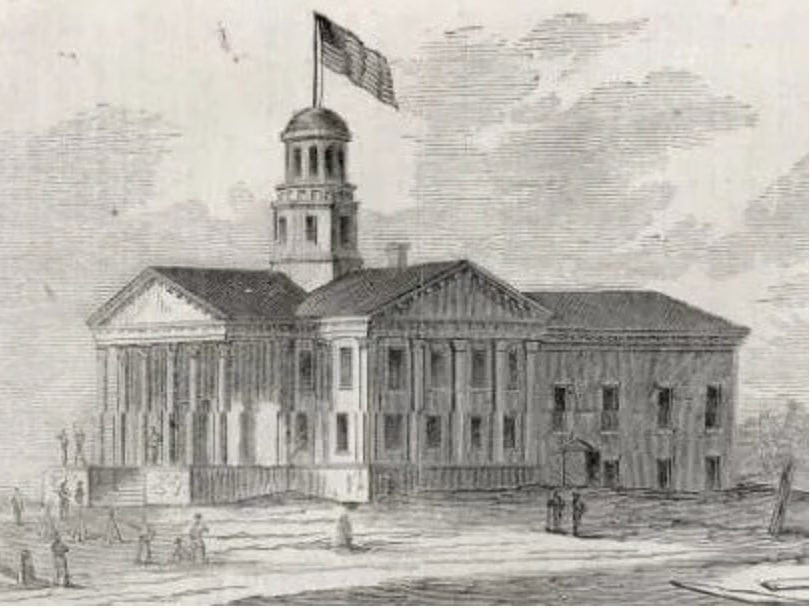
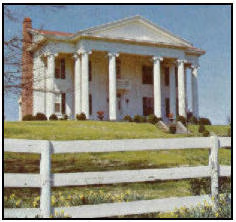
The La Grange Historic District, encompassing much of the town and including over 75 significant 19th-century structures such as Greek Revival homes (like Hancock Hall, used as Union Headquarters), the Immanuel Episcopal Church (organized in 1832), and the La Grange Methodist Church (circa 1836), was added to the National Register of Historic Places in 1974 for its architectural, commercial, educational, and military importance. During the Civil War, the town hosted up to 30,000 Union troops at its peak, endured over 60 skirmishes, and suffered extensive damage, including the dismantling of colleges for barracks and hospitals; notable figures connected to this period include General Ulysses S. Grant and General William T. Sherman, who used local homes as bases. La Grange is also the birthplace of Lucy Holcombe Pickens (1832-1899), dubbed the “Queen of the Confederacy” for her portrait on Confederate currency, and it maintains a focus on historic preservation today.